
Teeth Whitening in Melbourne
In-chair and take-home teeth whitening. Creative Smiles provides teeth whitening assessments at our Armadale clinic for patients across Melbourne. Your practitioner will discuss whether whitening is suitable, the likely limitations, sensitivity and other risks, aftercare and costs.
What is Zoom! teeth whitening?
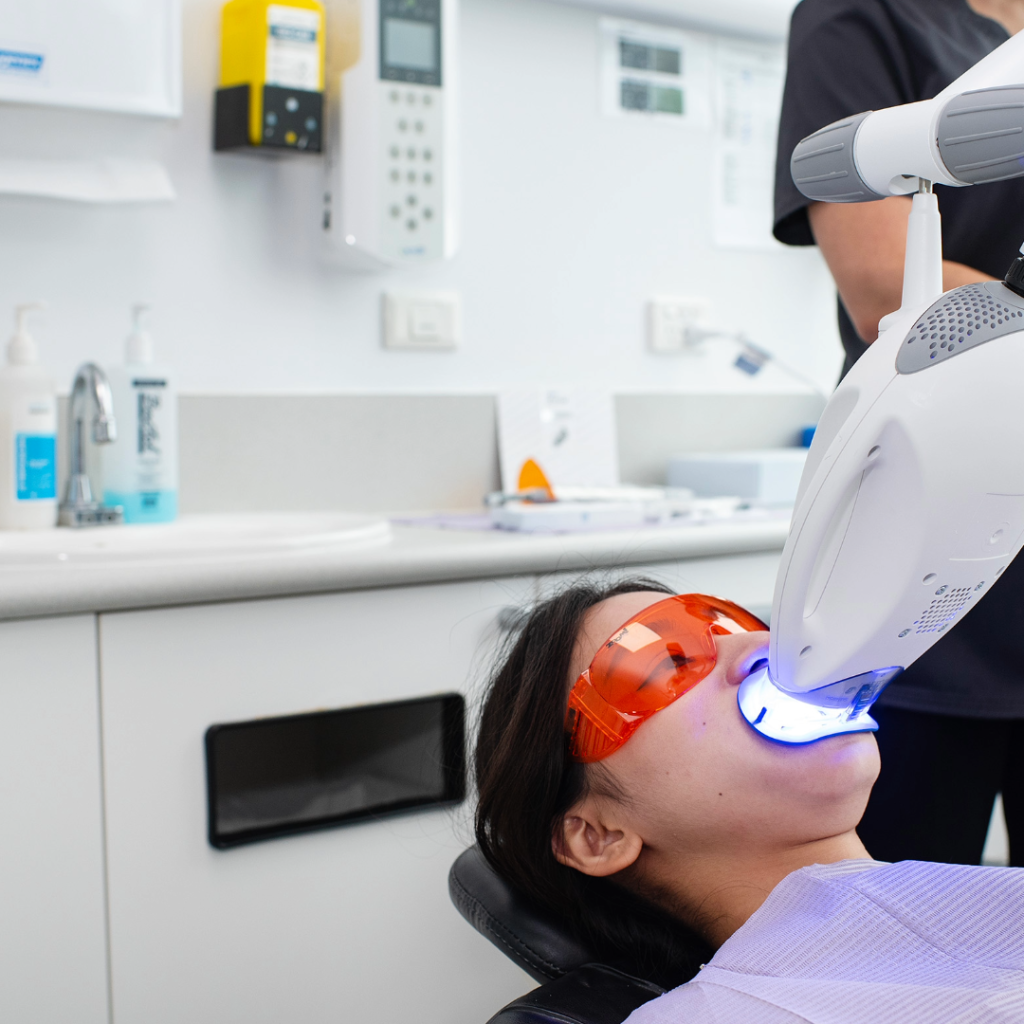
Philips Zoom is a professional teeth whitening system that uses a peroxide-based gel to lighten natural teeth. In-chair treatment follows the product protocol and your practitioner’s assessment. The amount and speed of colour change vary; a particular shade change cannot be guaranteed. Whitening does not change the colour of fillings, crowns or veneers.
Whitening products use hydrogen peroxide or carbamide peroxide, usually in a gel. healthdirect notes that only registered dental professionals can use whitening products containing more than 6% hydrogen peroxide.
In-chair and take-home whitening
In-chair whitening is done at the clinic, and a light is sometimes used. For take-home whitening, your practitioner makes thin custom trays and supplies gel at a strength that suits you, with instructions on how much to use and how long to wear the trays. healthdirect notes take-home whitening takes longer, which doesn’t mean the final result is better or worse.
Who carries out teeth whitening at our Armadale clinic?
All whitening treatment bookings are made exclusively with our Oral Health Therapist.
Further reading: healthdirect: teeth whitening and ADA: teeth whitening.
Is teeth whitening for me?
Suitability depends on your oral health, the cause of discolouration and the treatment you are considering. Whitening changes natural teeth, not fillings, crowns or veneers, so existing restorations may no longer match. Decay, gum disease, exposed roots, sensitivity or a peroxide allergy may make whitening unsuitable or require care first. Elective whitening may be deferred during pregnancy or breastfeeding. Creative Smiles provides this cosmetic whitening service to adults following assessment.
healthdirect advises that whitening is not recommended if you:
- Are pregnant or breastfeeding
- Have sensitive teeth
- Have gum disease
- Have cracks or holes in your teeth
- Have untreated dental problems
Terms and Conditions
Cosmetic whitening is available to adults following an oral-health assessment. Your practitioner will explain suitability, risks, alternatives, the proposed fee, inclusions and any separate charges before treatment. Any booking deposit and cancellation conditions will be explained before you book. A consultation does not oblige you to proceed. Read about whitening risks and recovery.
Reasons for tooth discolouration
Tooth colour varies naturally and can change with age, tobacco use, food and drink staining, some medicines or changes within a tooth. A darkening tooth can also need assessment for an underlying dental problem. The cause of discolouration affects which options may help. Whitening does not treat decay, gum disease or damage inside a tooth.
Surface staining
A professional clean may remove some surface staining and reveal the tooth’s natural colour. Cleaning does not guarantee a lighter natural shade.
Changes within the tooth
Deeper discolouration may respond differently to whitening or may not respond. An assessment helps identify the cause and whether any treatment is appropriate.
Steps for Zoom! teeth whitening in Armadale
Whitening should follow an oral-health assessment by a registered dental practitioner. It is not suitable for everyone.
1
Assessment
Your practitioner examines your teeth and gums and discusses expectations, alternatives, risks and costs.
2
Preparation
The appropriate whitening method is selected and soft tissues are protected according to the product instructions.
3
Treatment
The whitening product is applied using the prescribed protocol. Treatment may be modified or stopped.
4
Aftercare
Follow advice about sensitivity, cleaning and any take-home product. How long the result lasts varies.
What each step involves
Your practitioner examines your teeth and gums and discusses your expectations, alternatives, risks and costs. Existing dental problems may need treatment first.
The whitening product is applied using the prescribed protocol. Treatment may be modified or stopped if sensitivity or other problems occur.
Follow advice about sensitivity, cleaning and any take-home product. Repeat treatment is not automatically needed or suitable. The result and how long it lasts vary.
Alternatives to teeth whitening
You may choose to keep your natural tooth colour. A professional clean may help with surface staining. Your practitioner can discuss whether whitening or another approach is suitable for the cause of discolouration.
Veneers and crowns involve different indications, preparation, costs and risks. They should not be presented as automatic next steps if whitening does not produce a desired shade. Tooth preparation can be irreversible, and restorations may need replacement. Read about veneer risks and crown risks.
Contact Creative Smiles to discuss whitening suitability, limitations, risks, alternatives and fees. We will explain consultation and diagnostic charges before you book. You can choose to keep your natural tooth colour.
Before and after: teeth whitening


Invisalign & Teeth Whitening
Treatment completed by Dr Abella Huynh – DEN0002079456
Individual results vary. These images represent outcomes achieved by the treating practitioner and may not reflect typical results. Suitability for treatment is determined at a clinical consultation.
Book a teeth whitening assessment in Armadale
Whitening costs depend on your suitability, the proposed method and any other dental care needed first. Your practitioner will explain what is included, any separate assessment or cleaning fees, and whether take-home products are appropriate. Read our indicative treatment price guide and arrange an assessment for an individual quote.
For indicative fees, see our Price Guide. Payment options are explained on our Payment Plans page.
Questions about teeth whitening in Melbourne
What causes teeth to discolour?
Natural tooth colour can change with age, tobacco use, food and drink staining, some medicines or changes inside a tooth. The cause matters when considering treatment. A new or unusual colour change should be assessed.
Which teeth whitening method suits me?
There is no single best method for everyone. Your practitioner can compare in-chair whitening, a prescribed take-home product, cleaning or no whitening, depending on your oral health and the cause of discolouration. Both in-chair and take-home whitening have risks and limitations.
Will teeth whitening make my teeth more sensitive?
Whitening can cause sensitivity during or after treatment. It may last several days and can sometimes be significant. Stop using take-home whitening and seek advice if symptoms are severe or persistent. Do not increase product strength or frequency yourself.
Am I suitable for teeth whitening treatment?
An oral-health assessment is needed. Decay, gum disease, sensitivity, exposed roots, allergies, pregnancy or breastfeeding may affect suitability or timing. Existing fillings, crowns and veneers will not whiten and may no longer match natural teeth.
How does Zoom! whitening work?
Philips Zoom uses a peroxide-based gel to lighten natural teeth. In-chair treatment follows the relevant product protocol, which may include an LED light. Soft tissues need protection. Your practitioner will explain the method, likely limitations, sensitivity and other risks.
How long will my results last?
The duration of whitening varies with the original tooth colour, the method used, oral hygiene, diet and tobacco use. Colour can change again. Follow the product-specific aftercare instructions and discuss whether any further treatment is appropriate rather than assuming regular top-ups are needed.
Does teeth whitening work on fillings, crowns or veneers?
No. Whitening changes natural teeth and does not lighten fillings, crowns or veneers. A colour mismatch may become more noticeable after whitening. Your practitioner will discuss this before treatment; matching an existing restoration cannot be guaranteed.
Can I whiten my teeth if I currently have braces?
Ask your treating practitioner before using whitening products during orthodontic treatment. Fixed brackets can prevent even contact with the tooth surface, and an aligner should not be used as a whitening tray unless specifically prescribed for that purpose. Waiting until orthodontic treatment is complete may be appropriate.
How long does a take-home whitening kit last for?
Follow the storage instructions and expiry date supplied with your specific product. Do not use expired gel or judge its safety by its appearance or texture. Contact your practitioner if you are unsure how to store or use it.
Where can I get professional teeth whitening in Armadale?
Creative Smiles is at 1/1155 High St, Armadale, and welcomes patients from across greater Melbourne. Contact the practice to discuss an assessment for in-chair or take-home whitening, suitability, risks and costs.
How long does it take to see teeth whitening results?
Some people notice a colour change after in-chair treatment, while take-home treatment follows a prescribed course. The speed and amount of change vary. A particular number of shades or an immediate result cannot be guaranteed.
What are the risks and side effects of teeth whitening?
Whitening can cause tooth sensitivity and irritation or chemical injury to gums and other soft tissues. Results may be uneven and do not last indefinitely. Sensitivity may continue for several days; seek advice for severe or persistent symptoms before further treatment. Follow your practitioner’s and product instructions. Read about whitening risks and recovery.
Related treatments

Ask about teeth whitening in Armadale
Creative Smiles is at 1/1155 High St, Armadale VIC 3143. Book online or call (03) 9935 0993.